NEET UG · Video

Pteridophytes Plant Kingdom Guide
Master Pteridophytes in Plant Kingdom for NEET UG with TopAll.
5 min video

NEET UG · Biology
Revise the concepts. Try a question. Understand your next step.
176 medium questions available · Try answers free. Sign in to save progress or take a quiz.
NEET UG · Biology
Understand the concept, practise questions and check your learning.
Understand
Follow a fern life cycle, separate spores from gametes and test vascular tissue, heterospory and seed enclosure as different characters. Plant kingdom: track the generation before choosing the group
Read the guidePractise
Try 176 medium chapter MCQs. Untimed; check answers and available explanations as you go.
Practise chapter MCQsCheck your learning
Prepare a timed chapter quiz. Choose the available question count and pace before starting.
Prepare a chapter quizThis is chapter practice, not a full-length NEET mock paper.
These are playable question counts after quality and duplicate checks.
The practice player uses single-correct-answer MCQs. Chapter quizzes are not full-length NEET mock papers. Check the practice guide and official syllabus sources.
Revise before you practise
NEET UG · Video
Master Pteridophytes in Plant Kingdom for NEET UG with TopAll.
5 min video
NEET UG · Video
Understand Bryophytes in Plant Kingdom for NEET UG with TopAll.
5 min video
NEET UG · Video
Learn Rhodophyceae and red algae features for NEET UG with TopAll.
5 min video
NEET UG · PDF notes
Read PDF · 9 pages →Study Angiosperms with clear flowering plant concepts for NEET UG with TopAll.
9 pages
NEET UG · PDF notes
Read PDF · 10 pages →Learn Gymnosperms and their important plant features for NEET UG with TopAll.
10 pages
NEET UG · PDF notes
Read PDF · 10 pages →Master Pteridophytes in Plant Kingdom for NEET UG with TopAll.
10 pages
NEET UG · Mind map
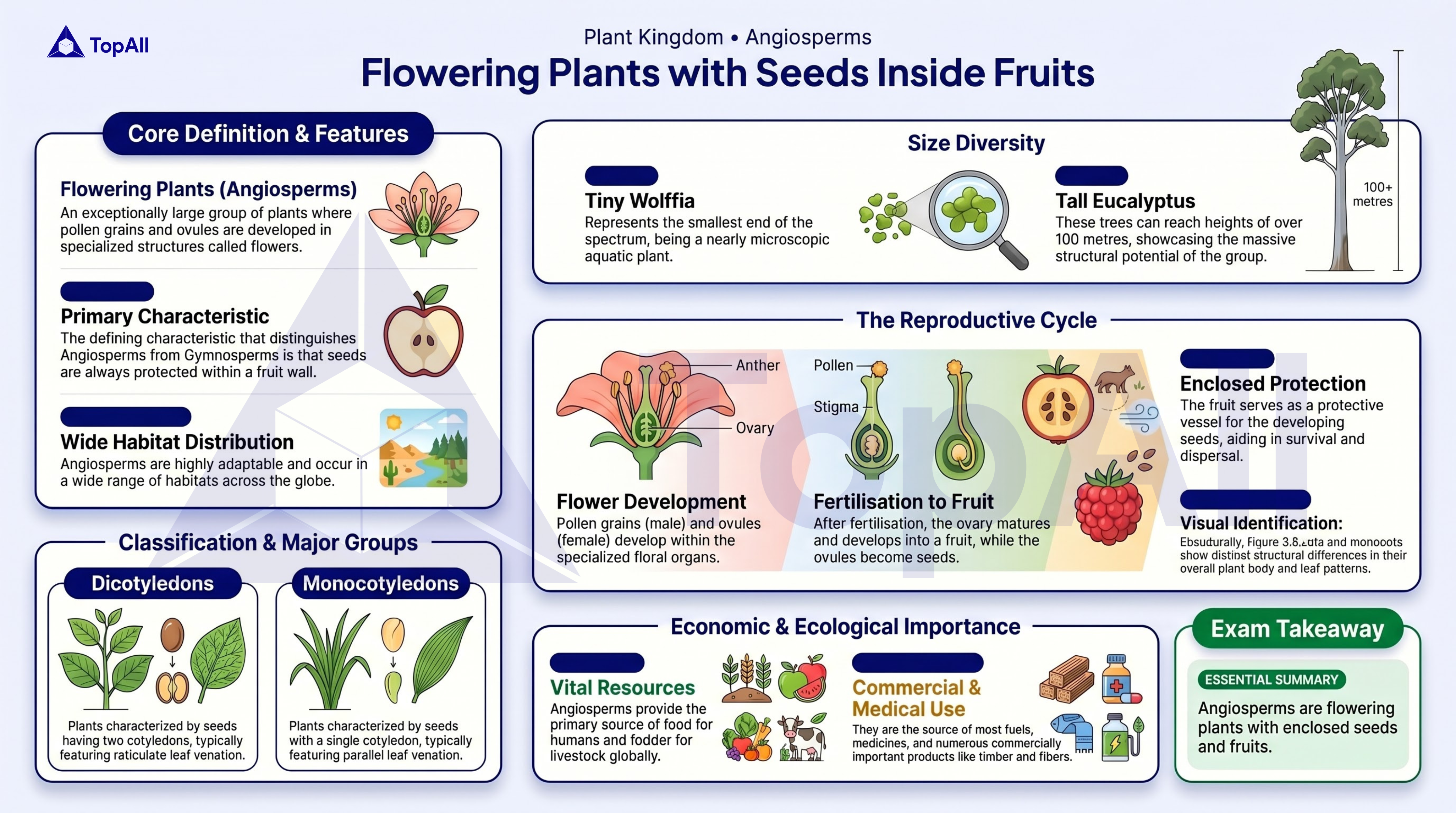
Study Angiosperms with clear flowering plant concepts for NEET UG with TopAll.
NEET UG · Mind map
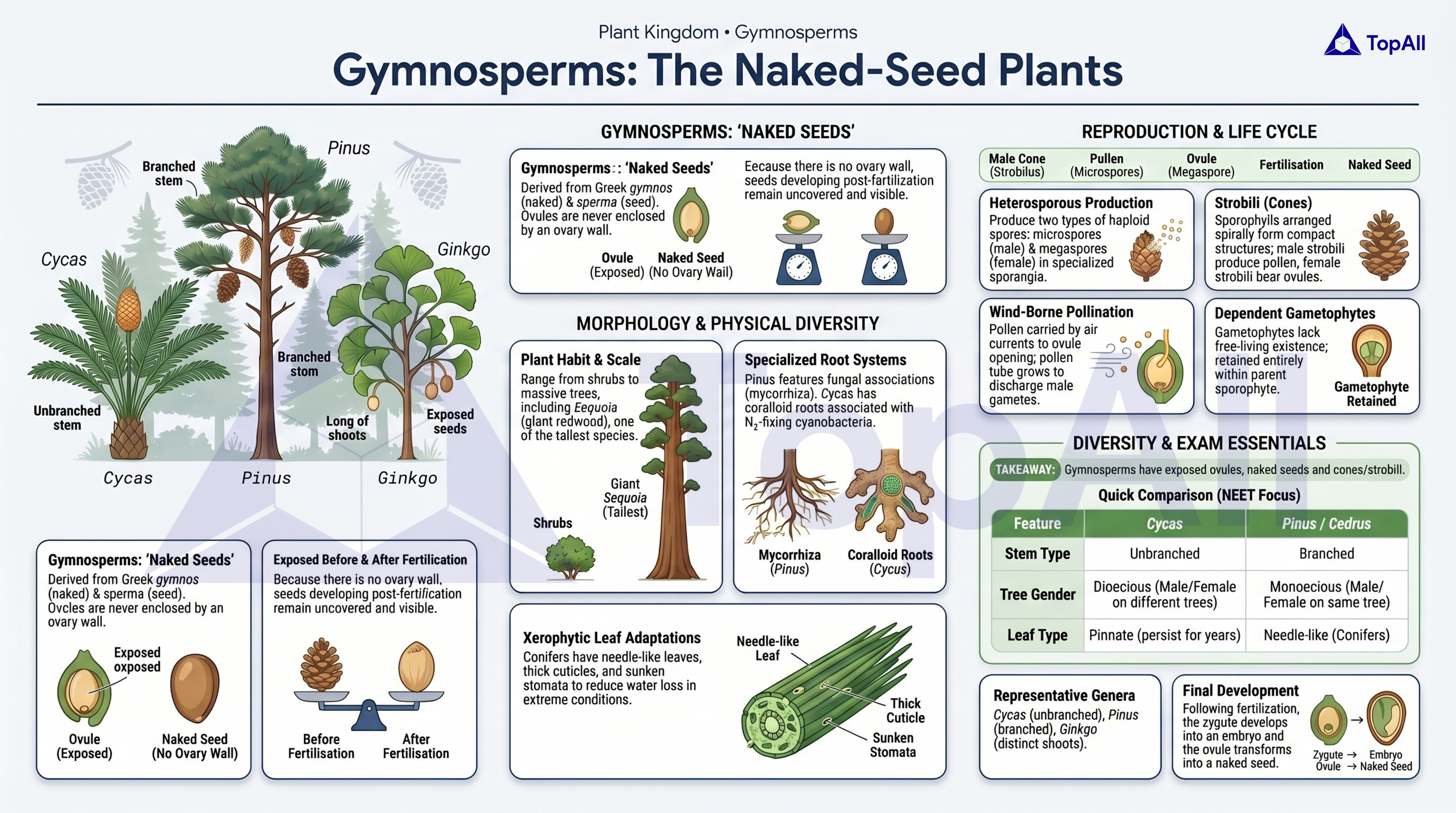
Learn Gymnosperms and their important plant features for NEET UG with TopAll.
NEET UG · Mind map
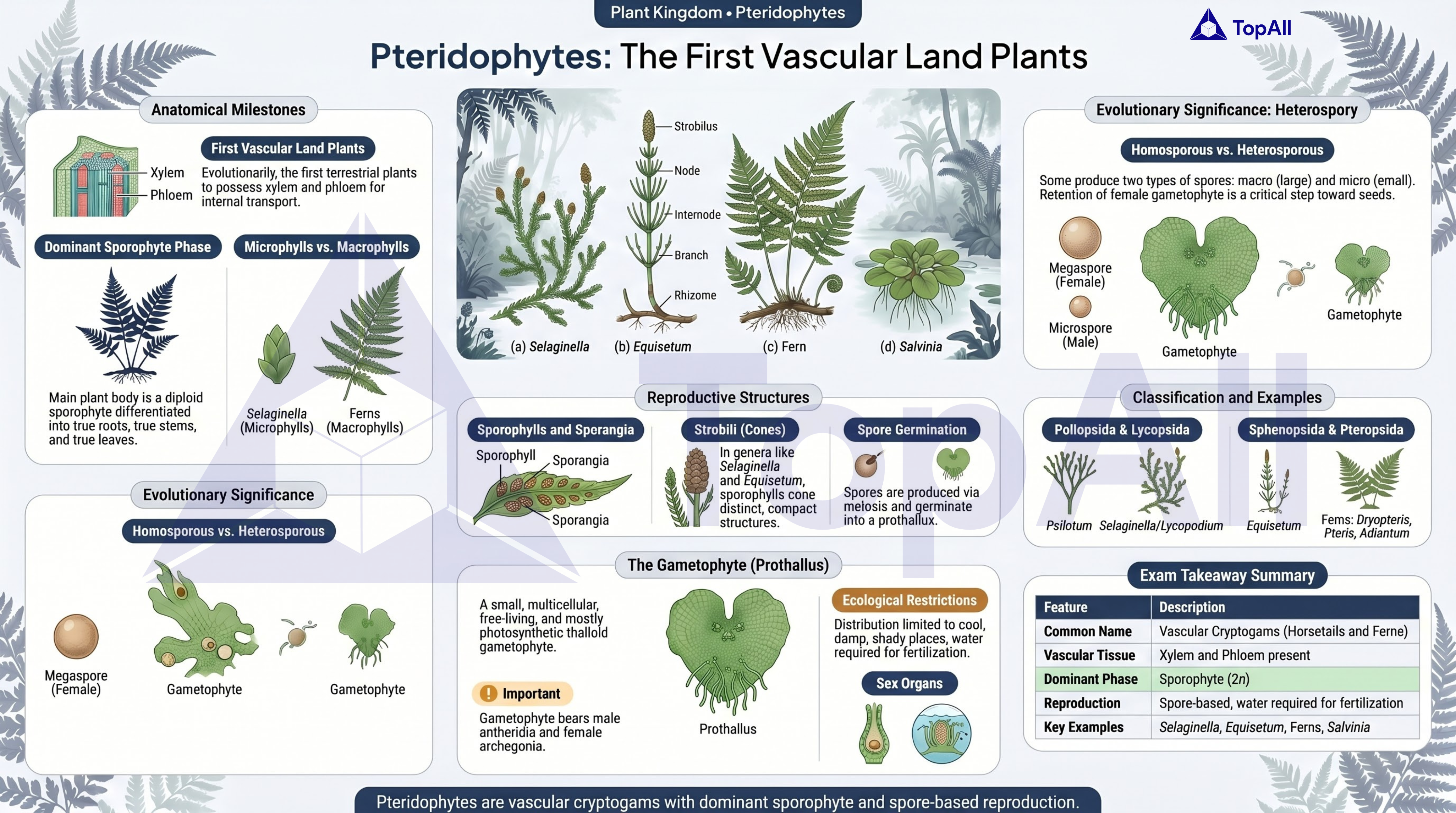
Master Pteridophytes in Plant Kingdom for NEET UG with TopAll.
Follow a fern life cycle, separate spores from gametes and test vascular tissue, heterospory and seed enclosure as different characters.
For NEET UG Biology students: follow a spore into the right generation, keep meiosis separate from fertilisation and distinguish heterospory from an actual seed. The cycle below is a generalised fern example, not a universal algal life cycle.
In the illustrated fern cycle, the diploid sporophyte produces haploid spores by meiosis. A spore grows by mitotic divisions into a haploid gametophyte. That gametophyte produces gametes by mitosis; fusion of two gametes forms a diploid zygote. The spore can start the gametophyte without fusion, while the gamete takes part in fertilisation. Being haploid does not make the two cell types interchangeable.
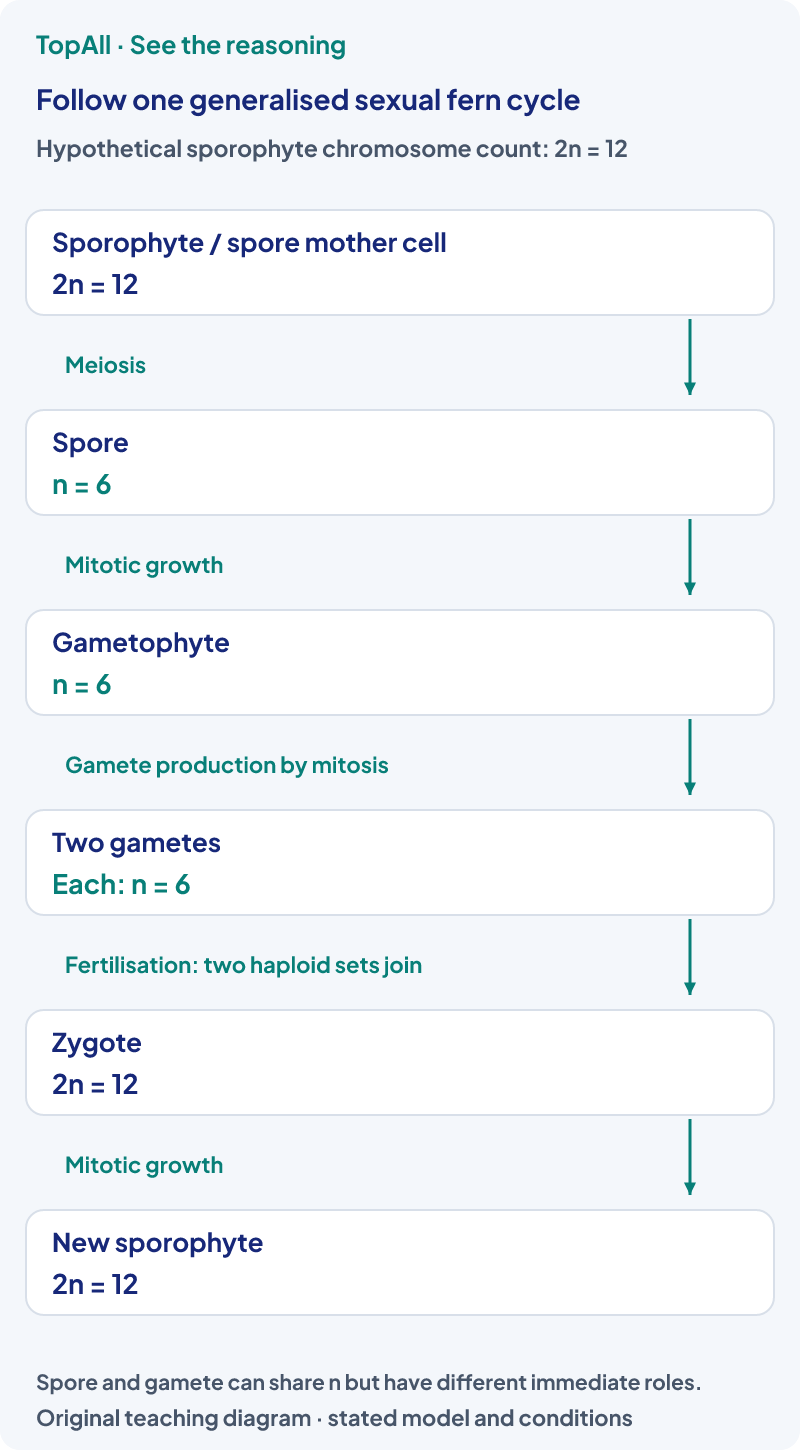
Start with the supplied 2n=12 spore mother cell. Meiosis gives spores with 6 chromosomes; the gametophyte grown from one spore also has 6 in its haploid cells. Its gametes have 6, rather than 3, because they arise through mitotic divisions in this cycle. Fertilisation combines two haploid sets, restoring 12 in the zygote. Chromosome number and DNA amount are different quantities; this example tracks sets, not every replication stage.
The conspicuous plant body in a typical bryophyte is the gametophyte, with its sporophyte attached and nutritionally dependent. In pteridophytes the conspicuous dominant plant is a sporophyte. A generalised homosporous fern also has a small free-living gametophyte. Do not transfer that free-living condition to every heterosporous pteridophyte or to the highly reduced gametophytes of seed plants.
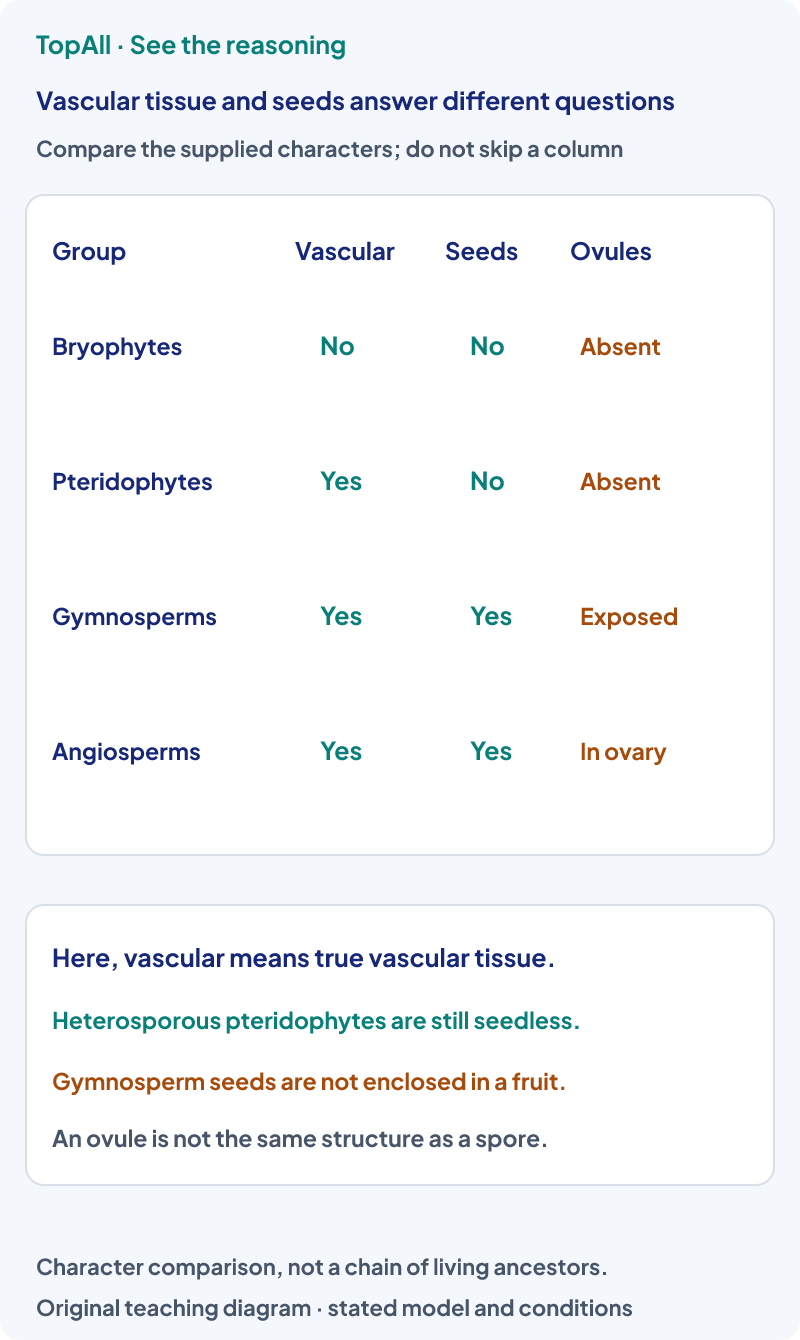
A supplied specimen has vascular tissue, produces spores and has no seeds. Among bryophyte, pteridophyte, gymnosperm and angiosperm choices, the combination fits pteridophyte. “Vascular” rules out the bryophyte option in this comparison, while “no seeds” rules out both seed-plant options. If the question additionally describes a free-living green prothallus and water-dependent fertilisation, that supports the generalised fern model; those extra characters are not required of every pteridophyte.
In bryophytes and many seedless vascular plants, motile male gametes need external water to reach the egg. This does not mean that every stage is submerged, or that all plants living on land are independent of external water for fertilisation. Seed plants transport the male gametophyte as pollen and use a pollen tube in reproduction; that is different from simply calling them water-free organisms.
NCERT names Selaginella and Salvinia as heterosporous pteridophytes. Their microspores and megaspores give rise to male and female gametophytes respectively. Thus “two spore types” does not by itself justify the answer gymnosperm. Retention and protection associated with the female side are relevant to the origin of seed habit, but these named pteridophytes remain seedless. Use actual ovule and seed features before selecting a seed-plant option.
In seed plants the microspore develops into a reduced male gametophyte represented by pollen. A pollen grain is not itself synonymous with a male gamete. A seed includes a young sporophyte embryo and associated protective and nutritive structures; the embryo is diploid. The chromosome constitution of every seed tissue is not established merely by calling the embryo diploid.
Do not call a spore a gamete just because both are haploid, halve the chromosome number again when a fern gametophyte makes gametes, treat all vascular plants as seed plants or equate heterospory with a completed seed habit. Label the structure, generation and process at each arrow.
In the same generalised sexual fern cycle, the sporophyte has 2n=20. Give the chromosome number in a spore, a cell of the gametophyte, a gamete and the zygote. Which step restores the diploid number?
The spore, haploid gametophyte cell and gamete each have 10 chromosomes. The zygote has 20. Meiosis reduces the sporophyte cell from diploid to haploid; mitotic growth maintains the haploid set in the gametophyte. Fertilisation joins two haploid sets and restores the diploid number. This answer concerns the stated cycle and chromosome sets.
A question explicitly describes a seed-bearing plant whose ovules are not enclosed by an ovary wall. Choose between pteridophyte, gymnosperm and angiosperm, and explain which two observations matter.
Gymnosperm fits the supplied combination. Seed-bearing excludes pteridophyte, while exposed ovules distinguish the gymnosperm option from angiosperm. Vascular tissue alone would not distinguish these three choices. A seed does not have to be enclosed in a fruit to count as a seed.
Rebuild the fern cycle and explain which arrow changes the number of chromosome sets. Continue with NEET Biological Classification for cellular grouping criteria, or NEET Living World for ranks and scientific names.
Chapter practice opens the broad Plant Kingdom pool, rather than a separate fern-only set.
Technical review: Codex (automated). Primary textbook definitions and methods checked on 24 October 2026. Worked examples, diagrams, counterexamples and self-checks are original. Human subject review is not claimed. This focused lesson supports the existing chapter catalogue; it does not claim complete current exam coverage.
For a missed question, label the confusion as generation, ploidy, spore versus gamete, vascular tissue or seed enclosure. State the missing condition before using a mnemonic or trying another question.

