NEET UG · Video

Cell Organelle NEET Biology Guide
Learn cell organelles and their functions for NEET UG with TopAll.

NEET UG · Biology
Revise the concepts. Try a question. Understand your next step.
91 medium questions available · Try answers free. Sign in to save progress or take a quiz.
NEET UG · Biology
Understand the concept, practise questions and check your learning.
Understand
Distinguish a nucleoid from a nucleus, locate ribosome types, try original self-checks and practise Cell: The Unit of Life MCQs. Classify cells from evidence, not one clue
Read the guidePractise
Try 91 medium chapter MCQs. Untimed; check answers and available explanations as you go.
Practise chapter MCQsCheck your learning
Prepare a timed chapter quiz. Choose the available question count and pace before starting.
Prepare a chapter quizThis is chapter practice, not a full-length NEET mock paper.
These are playable question counts after quality and duplicate checks.
The practice player uses single-correct-answer MCQs. Chapter quizzes are not full-length NEET mock papers. Check the practice guide and official syllabus sources.
Revise before you practise
NEET UG · Video
Learn cell organelles and their functions for NEET UG with TopAll.
NEET UG · Video
Learn flagella, pili and fimbriae for NEET UG with TopAll.
4 min video
NEET UG · Video
Understand chromatin, chromosomes and centromeres for NEET UG with TopAll.
4 min video
NEET UG · PDF notes
Read PDF · 8 pages →Understand lysosomes and their digestive role in cells for NEET UG with TopAll.
8 pages
NEET UG · PDF notes
Read PDF · 8 pages →Learn cell shapes and sizes clearly for NEET UG with TopAll.
8 pages
NEET UG · PDF notes
Read PDF · 8 pages →Learn flagella, pili and fimbriae for NEET UG with TopAll.
8 pages
NEET UG · Mind map
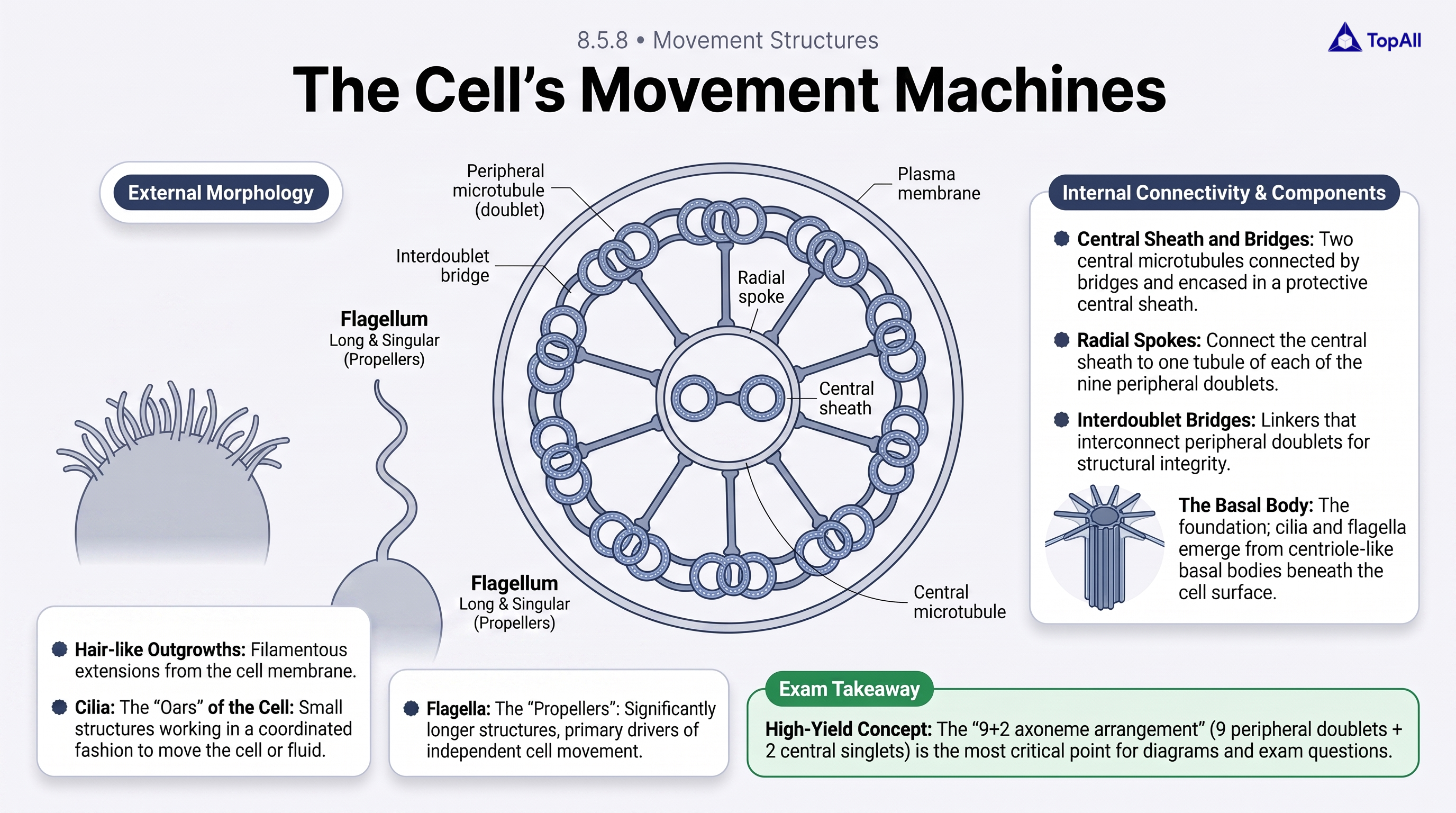
Study cilia and flagella structure and movement for NEET UG with TopAll.
NEET UG · Mind map
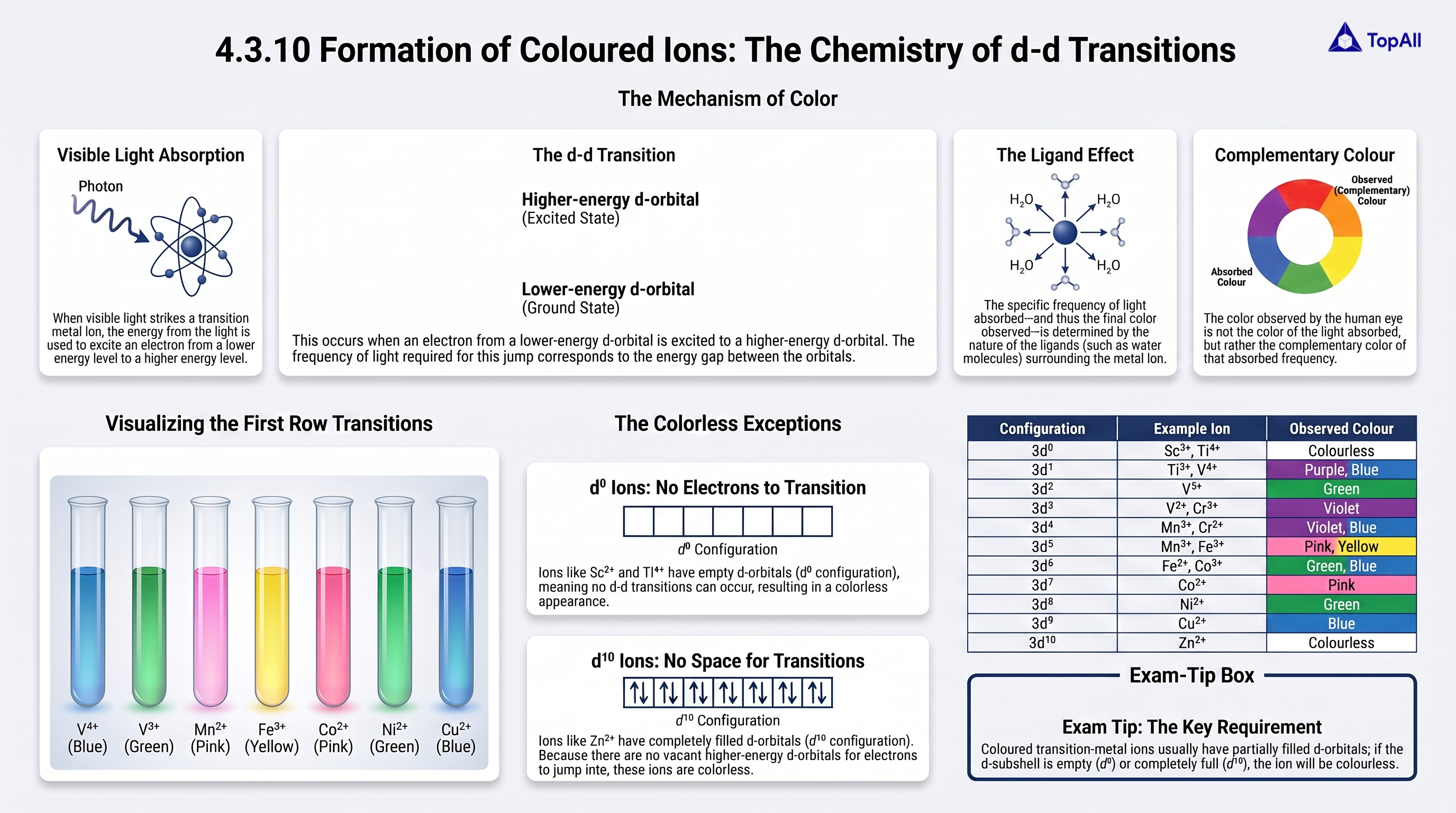
Learn lysosomes and their digestive role in cells for NEET UG with TopAll.
NEET UG · Mind map
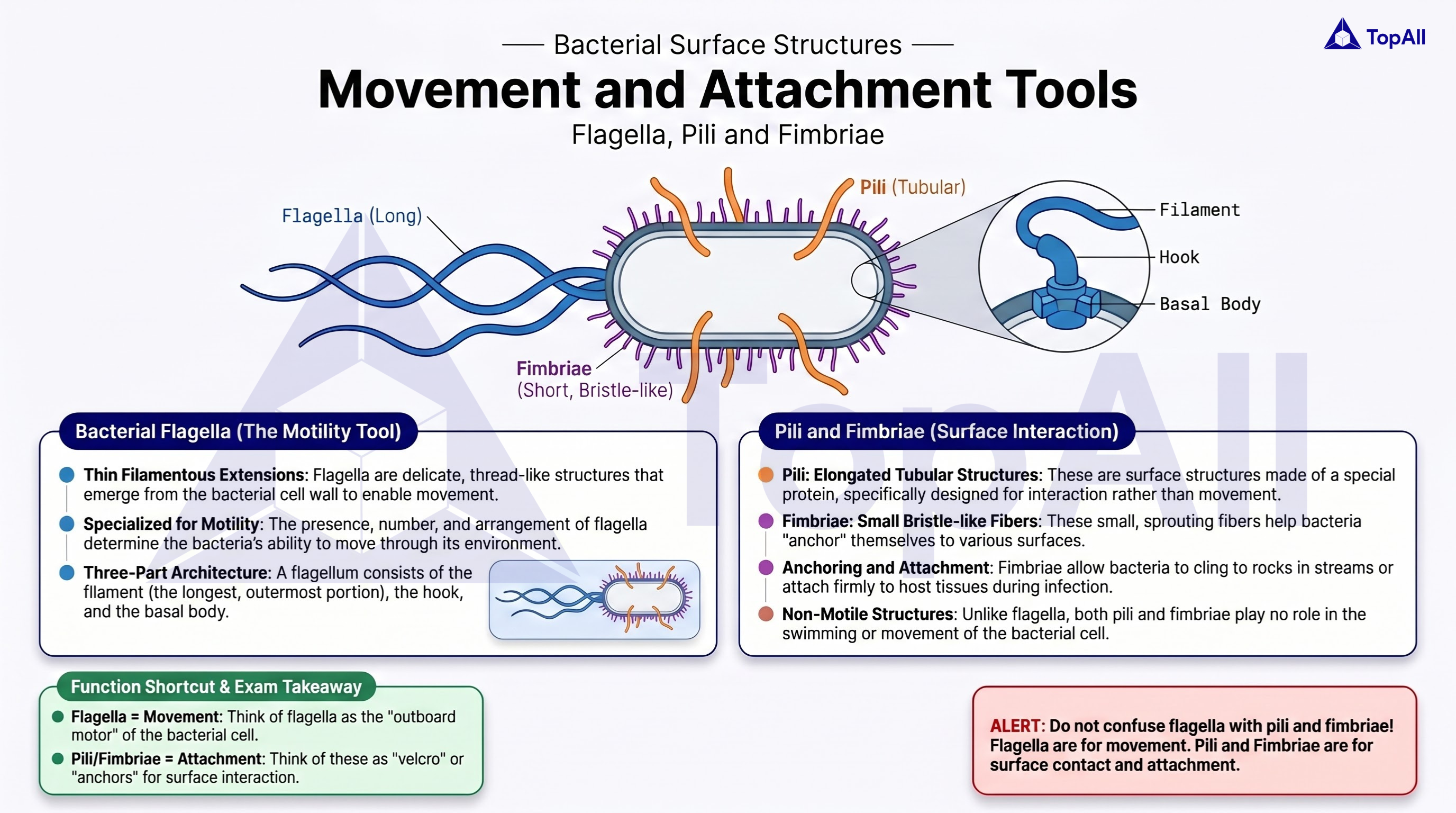
Learn flagella, pili and fimbriae for NEET UG with TopAll.
Distinguish a nucleoid from a nucleus, locate ribosome types, try original self-checks and practise Cell: The Unit of Life MCQs.
Use cell compartments and ribosome location together to interpret an unfamiliar cell description. This short lesson focuses on classification clues, not a full organelle catalogue.
A typical bacterium has a nucleoid without a nuclear envelope and lacks membrane-bound organelles. Typical plant and animal cells have a membrane-bound nucleus. Ribosomes and the plasma membrane occur in both groups, so neither alone decides the classification. Cell walls alone are also insufficient: plants and many bacteria have walls, while Mycoplasma lacks one.
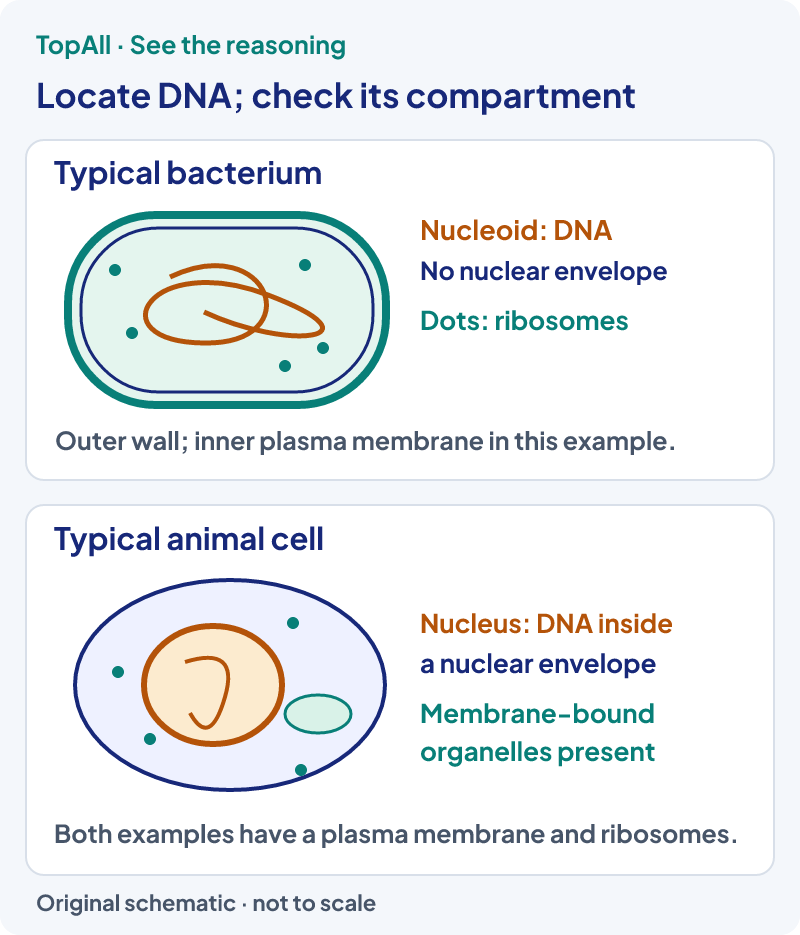
Cell A has a plasma membrane, ribosomes and DNA in a nucleoid; no nuclear envelope or membrane-bound organelles are found. Together, these observations support a prokaryotic cell.
Cell B has a wall, a membrane-bound nucleus and chloroplasts. Choose a eukaryotic plant cell. The wall did not distinguish A from B; the internal compartments did.
In the NCERT comparison, bacterial cytoplasmic ribosomes are 70S and eukaryotic cytoplasmic ribosomes are 80S; the textbook also labels mitochondrial and chloroplast ribosomes 70S. Use that stated curriculum comparison for its questions. It is not a universal measurement of every mitochondrion: a primary mammalian structural study describes a 55S mitoribosome. A ribosome itself is not membrane-bound, even on rough ER. The S notation is a sedimentation coefficient, so subunit values are not ordinary sums.
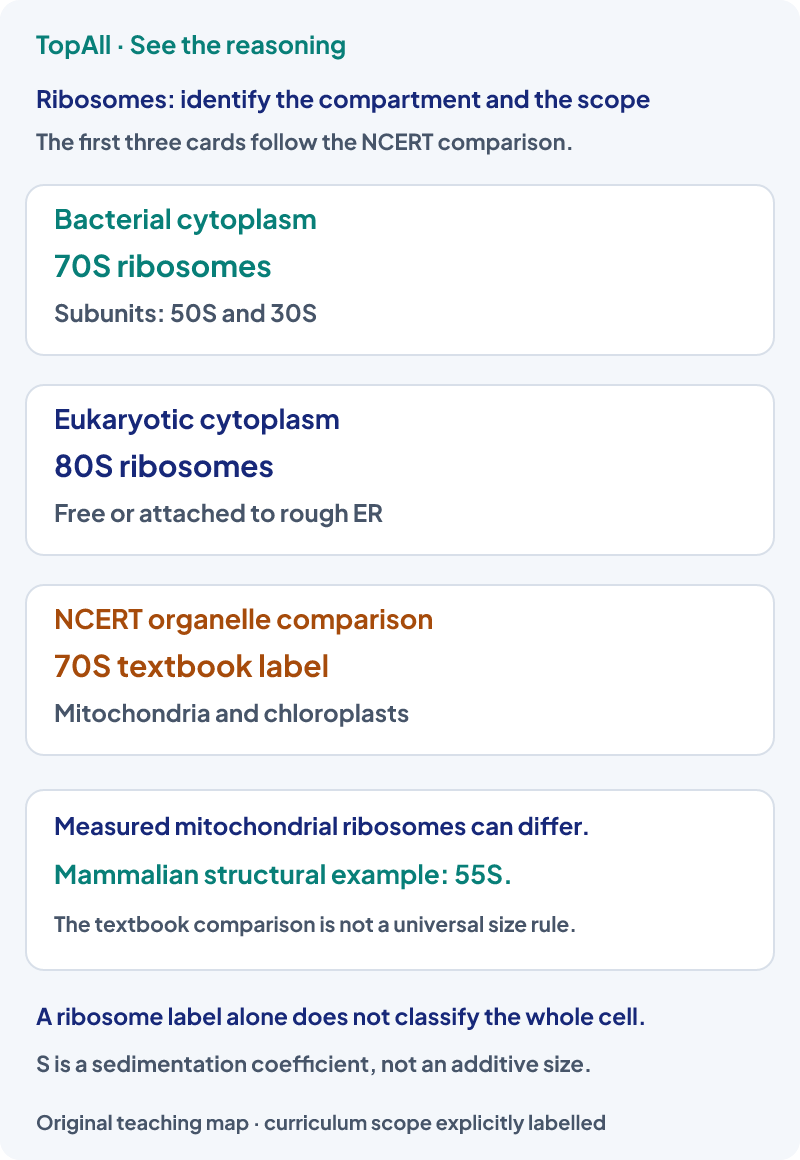
In a supplied NCERT-style comparison, a cell has a nuclear envelope and 80S cytoplasmic ribosomes, while its mitochondrial ribosomes are labelled 70S. The whole cell is eukaryotic: the internal organelle label does not replace the evidence about the whole cell. This is a textbook-model observation, not a claim that all real mitochondrial ribosomes measure 70S.
For your next visit, explain why the cellular compartment and the scope of the model must both be stated.
“No visible nucleus” alone is too weak: observation quality and specialised cells matter. For example, a mature mammalian red blood cell is derived from a eukaryotic lineage despite lacking a nucleus. Ask for the cell identity and supporting features. Do not classify every walled cell as bacterial, or treat an ER-attached ribosome as a membrane-bound organelle.
A cell has a wall, chloroplasts and a membrane-bound nucleus. Which is supported?
A. Prokaryotic because it has a wall
B. Eukaryotic plant cell
C. Animal cell because it has ribosomes
B. The nucleus and chloroplasts support a eukaryotic plant cell. A uses a shared feature as if it were exclusive. C does not follow from ribosomes, which occur in both typical plant and animal cells.
A 70S ribosome is isolated from a chloroplast inside a nucleated cell. Must the whole cell be prokaryotic?
A. Yes
B. No
C. Only if 50S + 30S equals 80S
B. The ribosome belongs to a chloroplast in a eukaryotic cell. Location resolves the apparent conflict. C treats sedimentation coefficients as arithmetic sizes, which is invalid.
Reconstruct the worked example from memory before looking at the diagrams. If a self-check exposed a mix-up, explain why your original answer failed, then try chapter practice.
Technical review: Codex (automated). Original source review: 23 October 2026; ribosome scope rechecked 25 October 2026 against the cited NCERT passages and primary mammalian structural research. Diagrams, examples and self-checks are original teaching material. Independent human subject review is not claimed.

