NEET UG · Video

Solanaceae Family NEET Guide
Learn Solanaceae family features and examples for NEET UG with TopAll.
5 min video

NEET UG · Biology
Revise the concepts. Try a question. Understand your next step.
92 easy questions available · Try answers free. Sign in to save progress or take a quiz.
NEET UG · Biology
Understand the concept, practise questions and check your learning.
Understand
Use axillary buds, stem nodes and floral insertion to distinguish leaves, leaflets, organ modifications and ovary-position categories. Plant morphology: identify the structure before naming the pattern
Read the guidePractise
Try 92 easy chapter MCQs. Untimed; check answers and available explanations as you go.
Practise chapter MCQsCheck your learning
Prepare a timed chapter quiz. Choose the available question count and pace before starting.
Prepare a chapter quizThis is chapter practice, not a full-length NEET mock paper.
These are playable question counts after quality and duplicate checks.
The practice player uses single-correct-answer MCQs. Chapter quizzes are not full-length NEET mock papers. Check the practice guide and official syllabus sources.
Revise before you practise
NEET UG · Video
Learn Solanaceae family features and examples for NEET UG with TopAll.
5 min video
NEET UG · Video
Master semi technical description in botany for NEET UG with TopAll.
4 min video
NEET UG · Video
Learn monocotyledonous seed structure easily for NEET UG with TopAll.
4 min video
NEET UG · PDF notes
Read PDF · 10 pages →Learn Solanaceae family features and examples for NEET UG with TopAll.
10 pages
NEET UG · PDF notes
Read PDF · 10 pages →Master semi technical description in botany for NEET UG with TopAll.
10 pages
NEET UG · PDF notes
Read PDF · 9 pages →Learn monocotyledonous seed structure easily for NEET UG with TopAll.
9 pages
NEET UG · Mind map
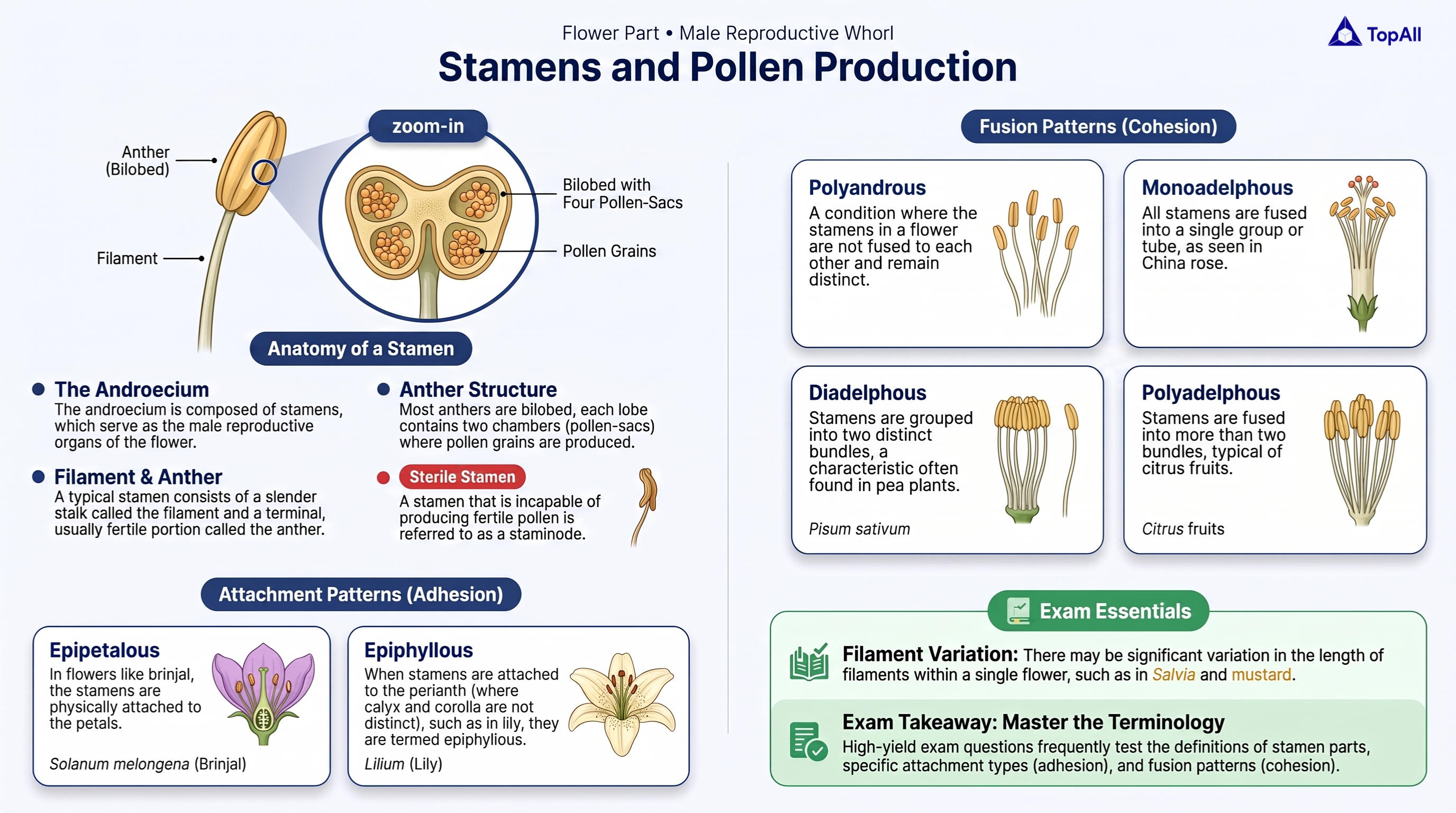
Master androecium and stamen structure for NEET UG with TopAll.
NEET UG · Mind map
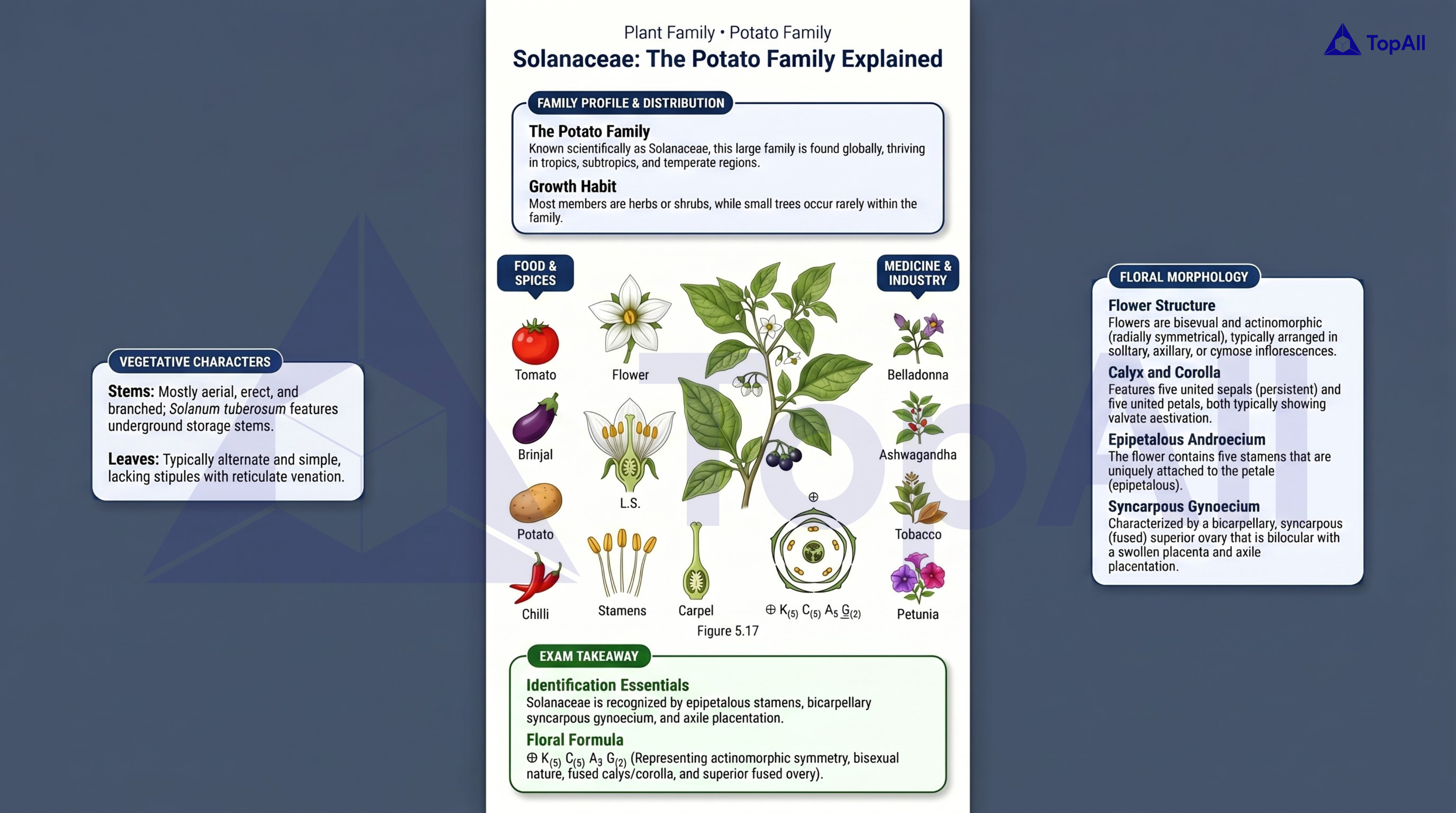
Learn Solanaceae family features and examples for NEET UG with TopAll.
NEET UG · Mind map
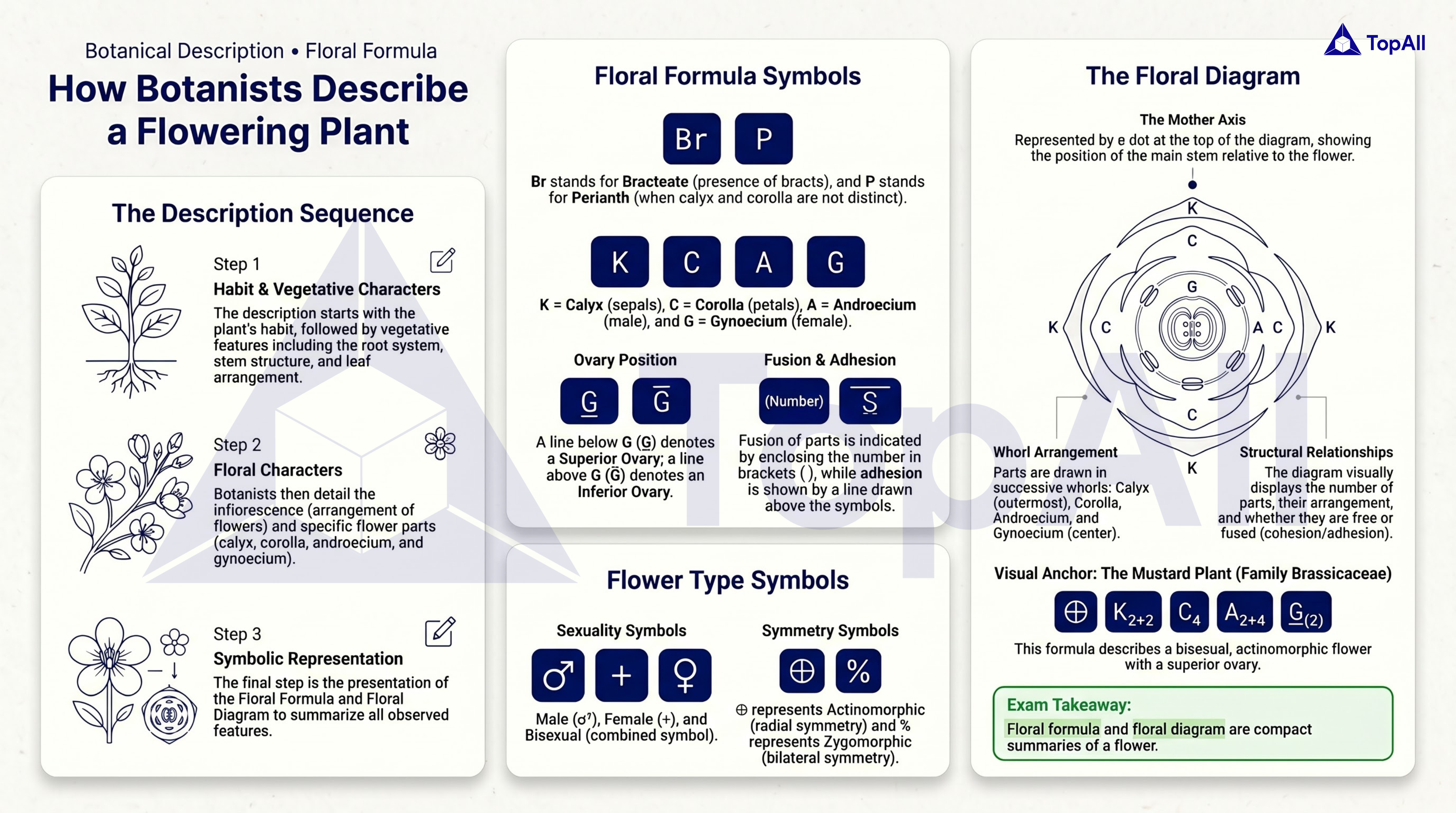
Master semi technical description in botany for NEET UG with TopAll.
Use axillary buds, stem nodes and floral insertion to distinguish leaves, leaflets, organ modifications and ovary-position categories.
For NEET UG Biology students: identify a whole leaf from its attachment, distinguish floral insertion patterns and use structural evidence rather than a plant part’s position or function alone.
Start with the stem, node and leaf axil. A standard compound leaf has leaflets on a shared axis but an axillary bud at the base of the whole leaf, not at each leaflet base. For a flower, compare where the other whorls arise relative to the ovary and whether surrounding tissue is fused to it. Storage, colour or an underground position alone does not identify an organ.
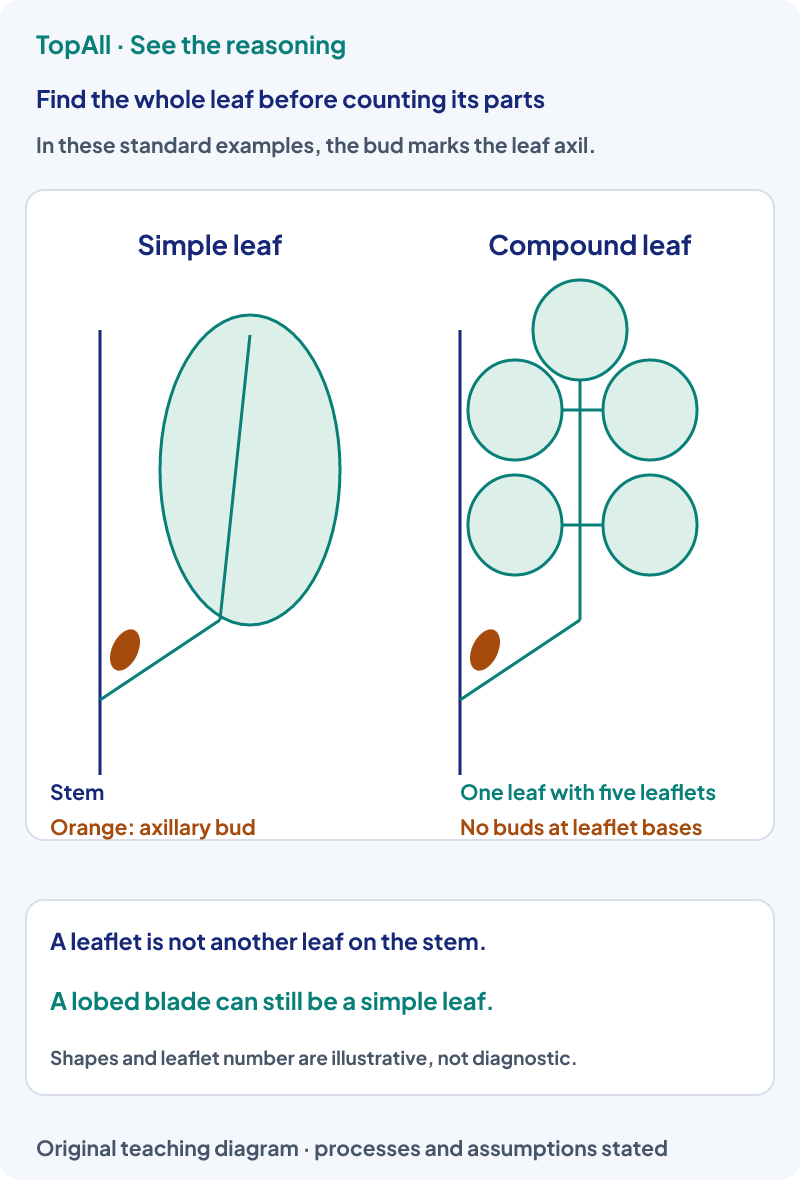
A specimen description gives one shared leaf axis with seven leaflets and a bud only where that axis joins the stem. The evidence supports one compound leaf, not seven leaves attached separately to the stem. If four such leaves are present, there are twenty-eight leaflets but four whole leaf bases in the stated model. A count must specify which structural level it measures.
Alternate arrangement has one leaf at a node; opposite has a pair; whorled has more than two. Count whole leaves rather than the leaflets within one compound leaf. Venation describes the arrangement of veins in a blade and answers a different question. A vein pattern does not itself tell you how many leaves arise at a stem node.
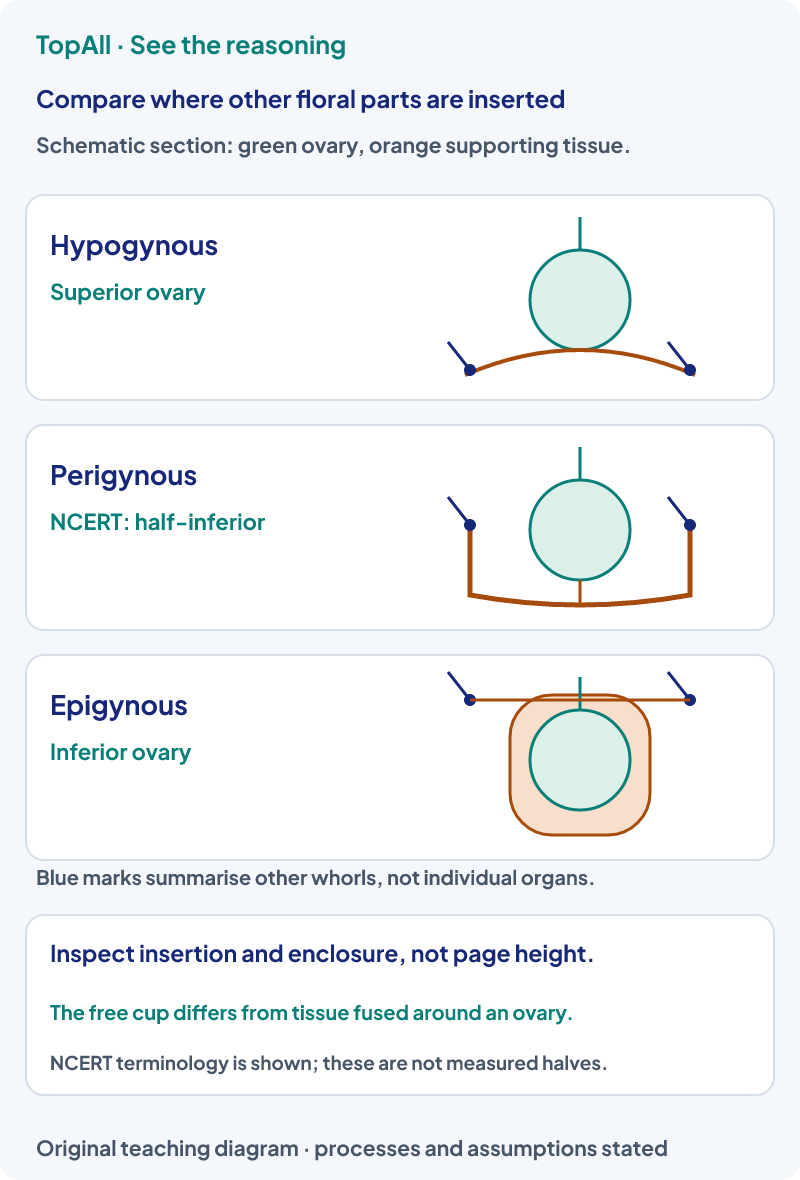
A section is rotated sideways, but labels still show petals and stamens inserted above an ovary enclosed by fused supporting tissue. The relationship remains epigynous with an inferior ovary. “Above” refers to the structural arrangement along the floral axis, not which object sits at the top of the screen. Rotation does not turn it into a superior ovary.
A storage structure needs more evidence than “swollen” or “underground”. Nodes, internodes, leaves and buds support stem identity in the relevant examples; root origin and structure support root identity. In a question comparing modifications, first identify the organ and then explain the function. Similar storage or climbing functions do not automatically establish the same developmental origin.
An original description gives an underground axis with repeated nodes, reduced leaves and buds capable of producing shoots. Those features support a modified stem. Calling it a root only because it is underground ignores the diagnostic observations. The conclusion concerns the supplied features, not a rule that every underground swollen organ must be a stem.
The cap protects the root apex. Meristematic activity lies near the tip behind the cap; elongation follows farther toward the shoot, then maturation. Root hairs occur in the maturation region, where specialised epidermal outgrowths increase the absorption interface. This order is not a diagram-scale measurement of how long a cell spends in each region.
Write the evidence beside the term: bud at whole-leaf base, number of leaves per node, insertion relative to ovary, or nodes on a modified axis. A deeply lobed blade is not necessarily compound. A cup around an ovary is not by itself evidence of fusion. Keep flower position, leaf form and organ modification as separate classifications.
Three stem nodes each bear an opposite pair of compound leaves. Every whole leaf has five leaflets. How many whole leaves and leaflets are described?
Opposite arrangement gives two whole leaves per node, so three nodes have six leaves. Six leaves with five leaflets each give thirty leaflets. Phyllotaxy remains opposite; five leaflets within a leaf do not make five leaves at the stem node.
Two flower sections both appear to have a cup around the ovary. One explicitly shows the cup free from the ovary; the other shows surrounding tissue fused with it and other whorls arising above. Should both be labelled epigynous just because they look cup-shaped?
No. The stated fusion and insertion relationships matter. The free-cup arrangement belongs to the perigynous comparison; the fused enclosure with whorls above is epigynous. A silhouette alone can hide the distinction, so use the section and labels.
Trace a whole leaf back to its axillary bud, then mark floral insertion in one section. Connect ovary and ovule identity to Flowering-Plant Reproduction, or locate changing cell behaviour in Plant Growth and Development.
Chapter practice opens the broad morphology pool, not a leaf-only or flower-only question set.
Technical review: Codex (automated), 24 October 2026. Core mechanisms were compared with the linked primary textbooks and university or government references. All diagrams, problem inputs and explanations are original. Numerical balances and diagram directions are checked separately. Independent human subject review is not claimed. These focused guides support the existing chapter catalogue; they do not claim complete current exam or syllabus coverage.
If the error was identification, return to the labelled feature. If it was counting, state the level—leaf, leaflet, node, cell or nucleus—before trying another question.

