NEET UG · Video

Panchanan Maheshwari Scientist Spotlight
Learn Panchanan Maheshwari's contribution to embryology for NEET UG with TopAll.
5 min video

NEET UG · Biology
Revise the concepts. Try a question. Understand your next step.
42 hard questions available · Try answers free. Sign in to save progress or take a quiz.
NEET UG · Biology
Understand the concept, practise questions and check your learning.
Understand
Understand the typical embryo sac, double fertilisation, chromosome counts and seed-related meiotic-event calculations. Flowering-plant reproduction: count stages, nuclei and fertilisation outcomes
Read the guidePractise
Try 42 hard chapter MCQs. Untimed; check answers and available explanations as you go.
Practise chapter MCQsCheck your learning
Prepare a timed chapter quiz. Choose the available question count and pace before starting.
Prepare a chapter quizThis is chapter practice, not a full-length NEET mock paper.
These are playable question counts after quality and duplicate checks.
The practice player uses single-correct-answer MCQs. Chapter quizzes are not full-length NEET mock papers. Check the practice guide and official syllabus sources.
Revise before you practise
NEET UG · Video
Learn Panchanan Maheshwari's contribution to embryology for NEET UG with TopAll.
5 min video
NEET UG · Video
Study seed advantages, dormancy and viability clearly for NEET UG with TopAll.
5 min video
NEET UG · Video
Master pollen pistil interaction and fertilisation steps for NEET UG with TopAll.
3 min video
NEET UG · PDF notes
Read PDF · 10 pages →Learn pollination definition, types and examples for NEET UG with TopAll.
10 pages
NEET UG · PDF notes
Read PDF · 9 pages →Study seed advantages, dormancy and viability for NEET UG with TopAll.
9 pages
NEET UG · PDF notes
Read PDF · 7 pages →Learn Panchanan Maheshwari's role in plant embryology for NEET UG with TopAll.
7 pages
NEET UG · Mind map
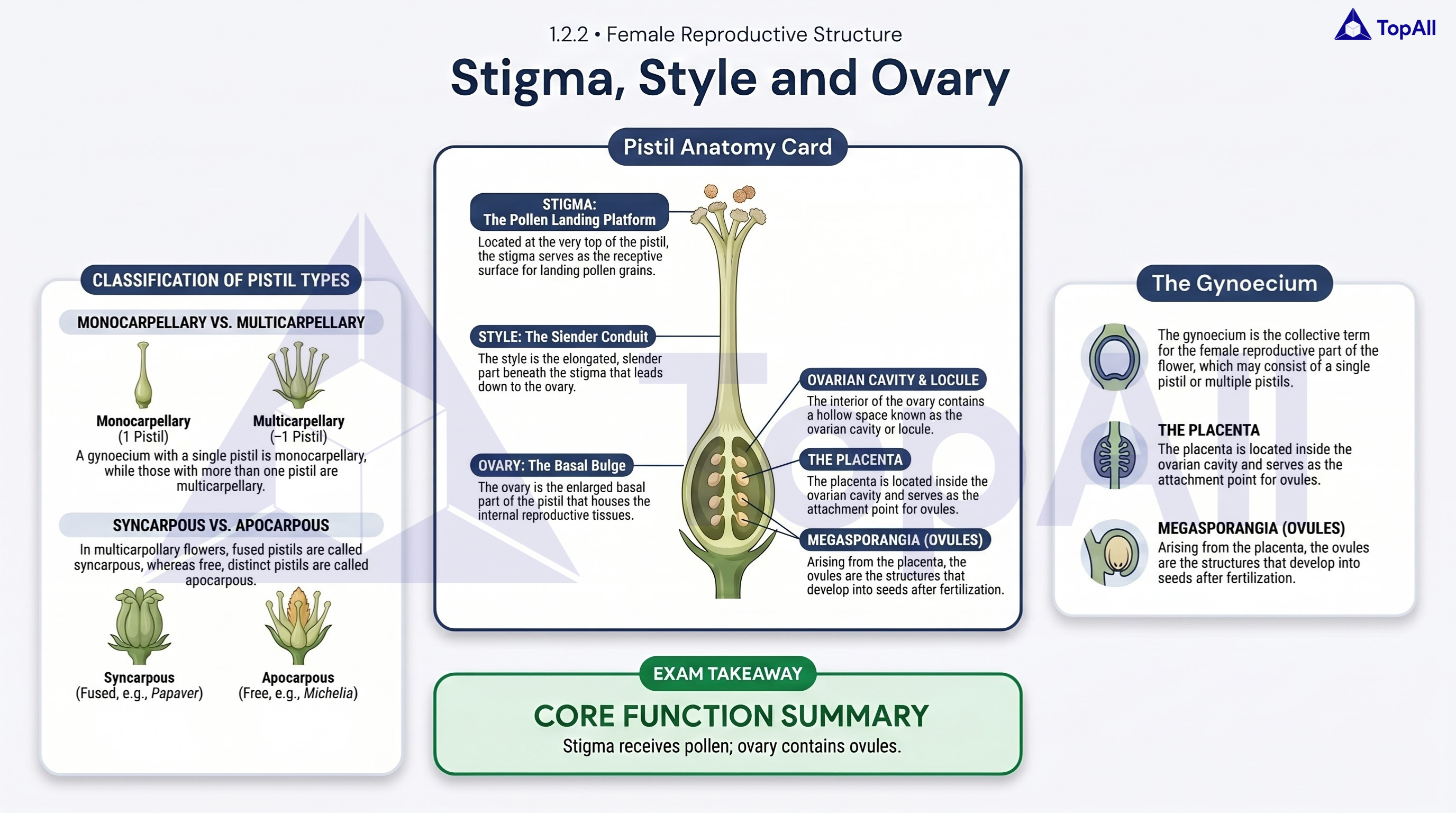
Understand pistil, megasporangium and embryo sac for NEET UG with TopAll.
NEET UG · Mind map

Study seed advantages, dormancy and viability for NEET UG with TopAll.
NEET UG · Mind map
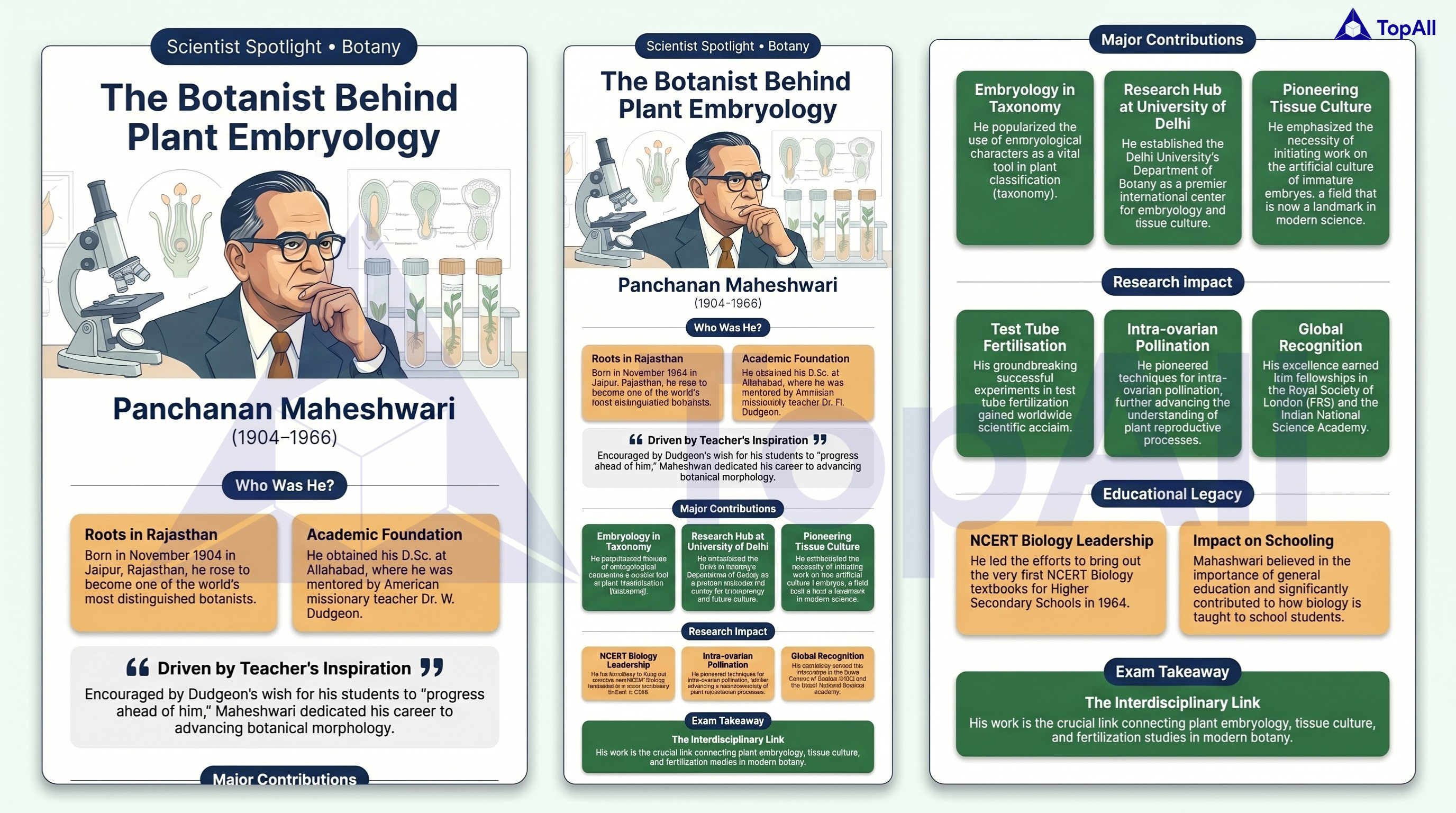
Learn Panchanan Maheshwari's role in plant embryology for NEET UG with TopAll.
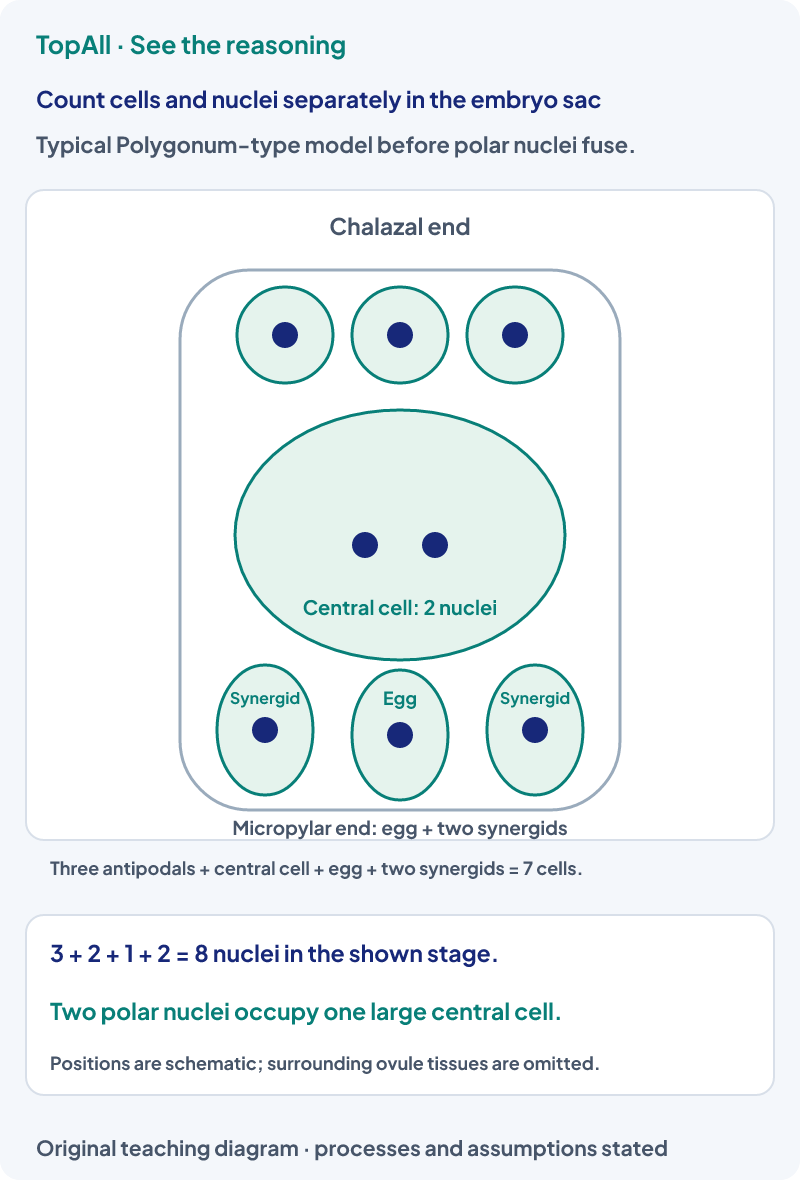
Understand the typical embryo sac, double fertilisation, chromosome counts and seed-related meiotic-event calculations.
For NEET UG Biology students: count cells and nuclei in a typical embryo sac, separate the two fertilisation outcomes and solve seed-counting questions with explicit assumptions.
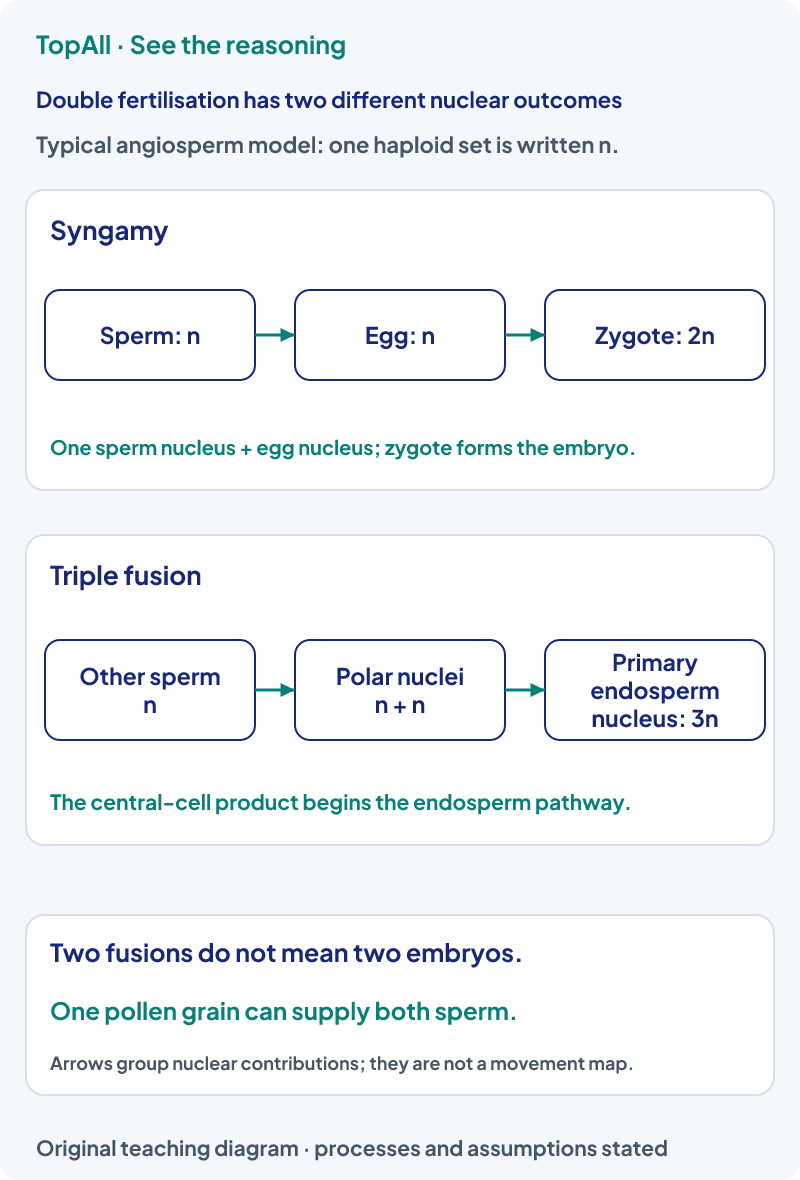
In the typical angiosperm model, one sperm nucleus combines with the egg nucleus to form the diploid zygote. The other combines with two polar nuclei, or their fused diploid nucleus, to produce the triploid primary endosperm nucleus. These events initiate the embryo and endosperm pathways. Double fertilisation describes two fusions, not two embryos or two pollen grains per ovule.
In an original typical-model problem, the sporophyte has . A normal haploid egg and each sperm therefore have 12 chromosomes. The zygote has 24, while the primary endosperm nucleus has 36 after combining three haploid nuclear complements. Count chromosomes in the named nucleus; do not multiply by the seven cells or eight pre-fusion nuclei in the entire embryo sac.
A microspore mother cell undergoes meiosis to give four microspores in the standard account. Male gametophyte development and the formation of two sperm involve mitotic steps. On the female side, a typical monosporic embryo sac develops from one functional megaspore after meiosis; the other three megaspores normally do not become additional functional sacs in this model. Spore, pollen grain and sperm are different stages.
Assume twenty-eight seeds, each from one normal monosporic embryo sac and one successful pollen grain, with no loss or apomixis. The female side needs twenty-eight megaspore-mother-cell meiotic events because only one functional megaspore is used per sac. The male side needs seven microspore-mother-cell events to supply twenty-eight pollen grains at four each. Total: thirty-five complete meiotic events. Each event includes the two successive meiotic nuclear divisions; do not confuse event count with counting those divisions separately.
In an angiosperm, pollination places pollen on a stigma. Compatible germination, pollen-tube growth and sperm delivery must still occur before fertilisation. Pollen arriving at a stigma therefore does not prove that a seed has formed. Self-pollination is still part of a sexual route when gametes fuse; the number of parent individuals does not replace the mechanism as the defining criterion.
A typical fertilised ovule is described as containing a developing embryo, endosperm and protective seed coat. The embryo derives from the zygote; endosperm follows the central-cell fertilisation outcome; seed coat derives from maternal integuments. These parts do not all have the same origin or necessarily the same ploidy. In the usual account the ovule develops into a seed and the ovary contributes to the fruit, rather than the ovule becoming the fruit wall.
The 2n embryo and 3n endosperm result follows a haploid egg, haploid sperm and two haploid polar complements in the specified typical model. Unusual embryo-sac development, altered ploidy or apomictic routes need their own assumptions. The seed as a whole is not one uniform triploid object. Identify the nucleus or tissue actually named in the question.
Use a stage ledger: mother cell→meiosis→spore→gametophyte→gametes→fusion product. On the typical female side, mark the functional megaspore. On the male side, remember that one pollen grain can yield both sperm. For a chromosome question, attach the count to one named nucleus, not to the entire embryo sac or seed.
A stated normal diploid-sporophyte model has a primary endosperm nucleus with 45 chromosomes. What are the haploid number, zygote count and maternal integument count?
The typical nucleus is 3n, so n is 15. The zygote is 2n = 30, and ordinary maternal integument cells are also diploid with 30. This inference assumes the stated normal embryo-sac and sporophyte model; 45 is not the count for every nucleus in the seed.
Twelve typical ovules are each successfully fertilised by one pollen tube delivering two sperm, with no loss. How many pollen grains supply them, and how many nuclear fusion events occur?
Twelve pollen grains supply the twelve embryo sacs under the assumptions. There are twelve syngamy events and twelve triple-fusion events, giving twenty-four fusion events in total. Twenty-four sperm are involved, but two sperm per pollen grain do not require twenty-four pollen grains.
Draw the seven cell boundaries, then count the eight pre-fusion nuclei. Explain why the two sperm have different outcomes. Use Plant Morphology to distinguish ovary from ovule, or compare reproductive routes in Reproduction in Organisms.
Practice opens the broad flowering-plant reproduction pool, not a guaranteed chromosome-only set.
Technical review: Codex (automated), 24 October 2026. Core mechanisms were compared with the linked primary textbooks and university or government references. All diagrams, problem inputs and explanations are original. Numerical balances and diagram directions are checked separately. Independent human subject review is not claimed. These focused guides support the existing chapter catalogue; they do not claim complete current exam or syllabus coverage.
Return to the exact stage behind your mistake: maternal cell, spore, gametophyte, gamete or fusion product. Write its ploidy and role before selecting another answer.

